Exploring the relationship between grassroots art and on-the-ground activism in an era of Trump and ICE, while living in one of the most diverse cities in the world.
This month, I was fortunate enough to interview Jorge Velez of Fear Not Ourselves Alone and Katixa Espinoza of Sana Sana, two DIY musicians who are organizers for ICE Out of New York. While we spoke about their early experiences with music, we also focused on how their art overlaps with their activism.
For them, that included:
1. Prioritizing affordable all-ages/sober shows
2. Facilitating activities like know-your-rights trainings before music starts
3. Inviting community organizers to speak between bands
They also reminded me that these things aren’t limited to DIY shows, either. I hope you take something positive and actionable from this, and that you’re staying safe with all that’s been going on.
It’s weird to think that 2020 was six years ago, but I digress. In July of that year, amidst nationwide shutdowns and protests, John K. Samson released a song called “Fantasy Baseball at the End of the World.” The song began relatably: “I manage my fantasy baseball team better than I manage my anger these days.”
For the uninitiated, John K. Samson fronted the widely popular Canadian indie band The Weakerthans, and he was previously a member of the very politically outspoken Propagandhi. "Fantasy Baseball..." was kind of a one-off, because nowadays, Samson doesn’t do much music. Rather, he spends a lot of time bettering his local community in Winnipeg by organizing for unhoused people or teaching creative writing classes to inmates. The end of the aforementioned “Fantasy Baseball..." concludes “I’m going outside, I’m going to help organize something better, something beautiful.” And I guess that's what he's doing.
Now, this article isn’t about John K. Samson—I just bring him up as an example of an artist who walks the walk. When things like these recent ICE raids start intensifying, I have to ask myself if writing songs is enough.
That said, following the murders of Renee Nicole Good and Alex Pretti, I joined Desmond of Career Day at an ICE Out of New York meeting. Two of the ICE Out organizers were also artists I recognized from the DIY music community—Jorge Velez of the experimental Fear Not Ourselves Alone and Katixa Espinoza of shoegazers Sana Sana. Upon speaking with them, it was clear that they put their money (or lack of money - let’s be honest, this is DIY) where their mouths are.
I felt that those of us looking to do more could learn a thing or two from them, so the three of us sat down on Zoom a few weeks ago to chat about their entry points to music and how their lives as artists overlap with their activism.
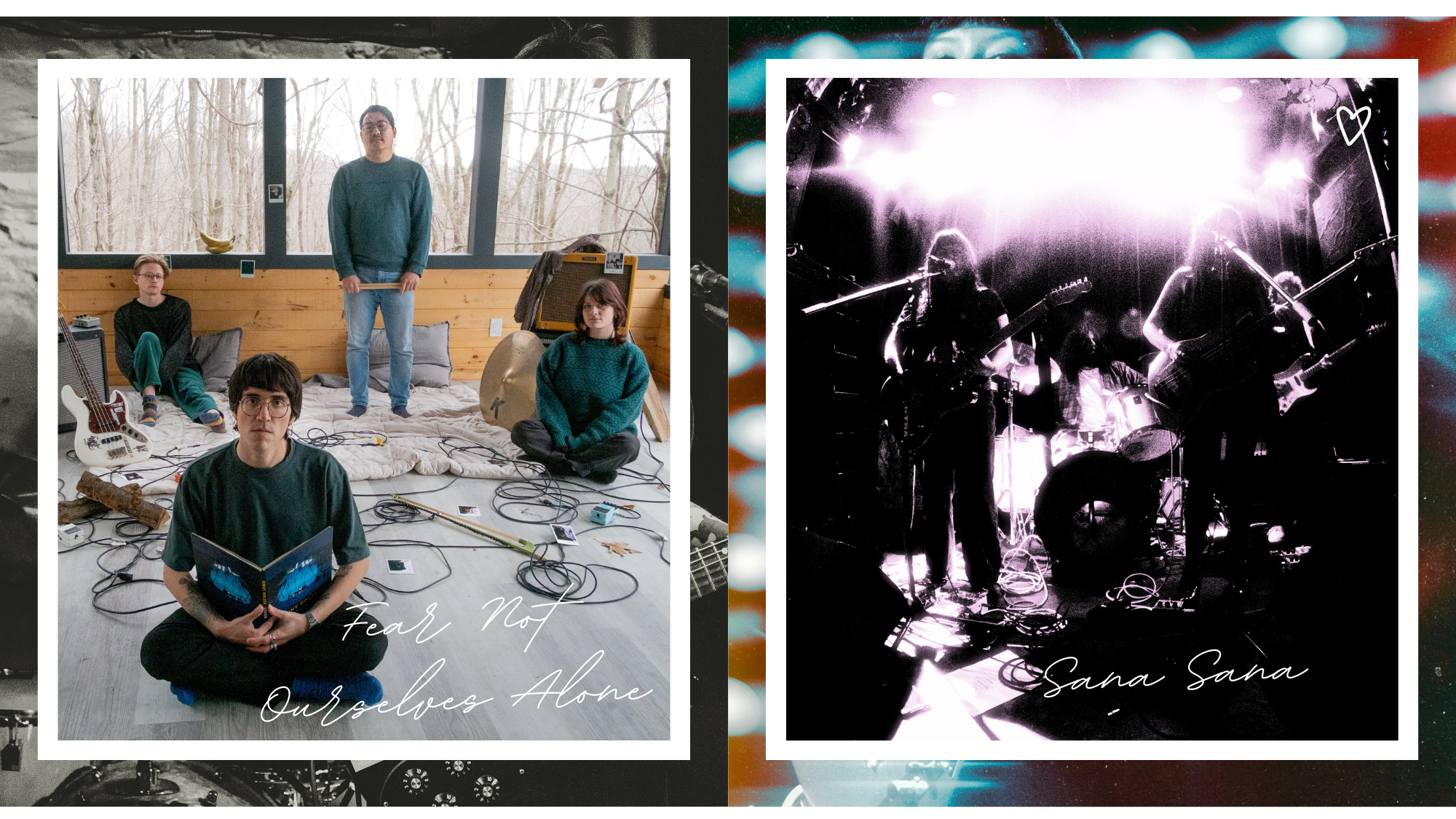
Promo photos for Fear Not Ourselves Alone (left), Sana Sana (right)
As musicians and activists, I’m curious how both of you got into music and how that helped shape your worldviews.
Katixa Espinoza: [to Jorge] Do you want to start?
Jorge Velez: Sure. I got my first CD player when I was 7 or 8 years old, and my older sister would make me mix CDs. When I later got my first iPod, she gave me four albums: Green Day’s American Idiot, Yellowcard’s Ocean Avenue, Hoobastank’s The Reason, and most importantly, Hot Fuss by The Killers. Hot Fuss was the one that made me be like, “wow, music is my life.” I think that was the first time I heard synthesizer! And while I would never call The Killers a political band, they opened me up to thinking, “What else can be written about?” There’s a way that gender bending happens in songs like “Somebody Told Me,” and gender fluidity became a big theme in my songwriting in my late teens and early 20s. It all stems back to how The Killers broke my brain when I was a kid [laughs].
Katixa, what about you?
Katixa: I'm from Miami and grew up in a largely Cuban area called Hialeah. I mostly spoke Spanish until I moved to a place called Broward county, where everyone spoke English. I learned English by reading and listening to Britney Spears and Christina Aguilera, and my mom loved Shakira. I'm Colombian Ecuadorian, so it was very common to listen to Shakira as a breakthrough Colombian rock/pop artist. My uncle was the rocker in the house. He listened to Nirvana, Soundgarden, Gorillaz, Green Day. He got me a USB MP3 player and downloaded that and a lot of house music [onto it].
I also loved to sing, and studied vocal performance in high school at an arts conservatory. My family couldn't really afford instruments, but my dad bought me a ukulele, which I thought was as close to a guitar as I would get. But then I moved to New York in 2016 and started working for my college radio station, booking tiny DIY shows and doing music interviews with my close friend Basia [of Ballpark Figure], who gave me her starter guitar. That changed the game for me.
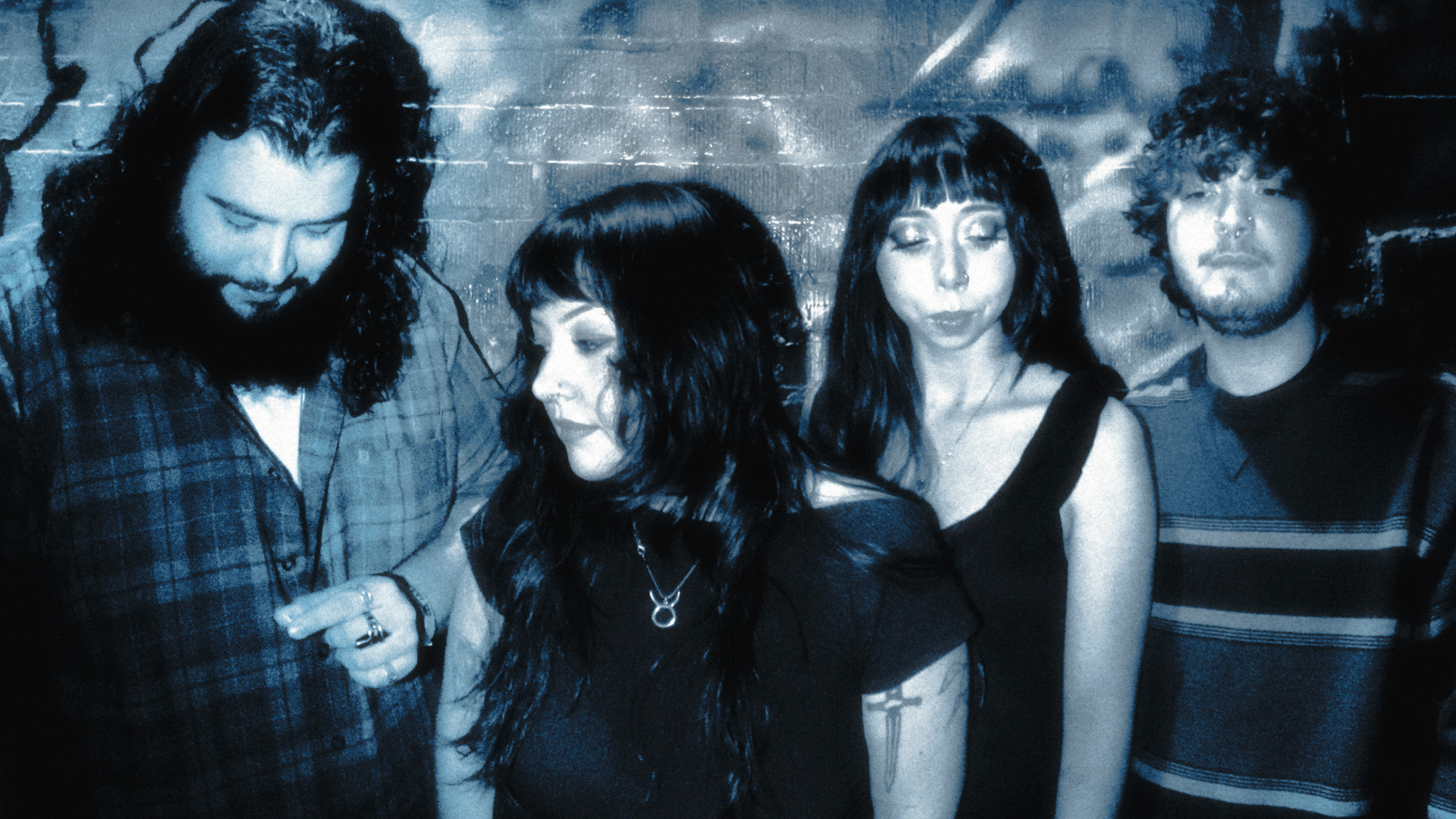
Sana Sana
I love that. When did politics become a conscious part of your life?
Katixa: My first class consciousness awakenings came through Tumblr, but I learned about feminism hands-on in my household [growing up], which was very matriarchal. But Tumblr gave me the language of intersectional feminism, [economic] classes, and capitalism. Then in 2016, my freshman year of college, Trump was elected, and I went to the post-election protest. That's where my activism “started”—women's protests and anti-ICE protests. I also taught some political zine-making classes. There was a time where I stopped doing a lot of organizing, but that restarted last year, with the intensity of the agenda that ICE and Trump have. That felt really personal and inescapable to me because, at one point, my family was undocumented.
Jorge, how about you?
Jorge: Well, I grew up and currently reside in Queens. I think the diversity there was very important to my political awakening and consciousness, recognizing that Queens and New York are examples of what the world could look like. Not like New York is utopia, but it’s a place for bizarre characters of every nation. We love each other, we hate each other. [laughs] But there's a powerful ability to coexist.
Similar to Katixa, I had more of a political awakening in college. I am the child of Colombian immigrants that settled in Queens, which is, again, beautiful, but [my parents] are also very anxious, so I grew up quite sheltered. By the time I was exploring those topics online, I knew that I had better things to say than just, “I am depressed.” That was around when Fear Not started, in 2016 or 2017. Trump won [the election], and I felt very activated by that. Like, how can I create conversations around identity politics? How can I create conversations about the justice of immigrants, the sacrifices my parents made coming to this country, and what that means when immigrants are being put in cages?
Right.
Jorge: I was like, “I don't know how to be an activist. But I can write a song.” So that was my entryway. [Music] felt like the most I had to offer, then the pandemic happened. I had Covid in March of 2020. I was on the floor of my childhood bedroom, thinking, “this could be it,” because we had no information yet, and while It felt like my songs were politically important to me, I also felt like, “what is the point of art?” That was something I wrestled with on our last record. What does it even mean to make a political song in a time of such turmoil?
Finally, our friend Max Narotzsky from Ultra Deluxe was like, “hey, we have some fliers at the table. Get plugged in.” So I went to an anti-Trump organizing meeting.
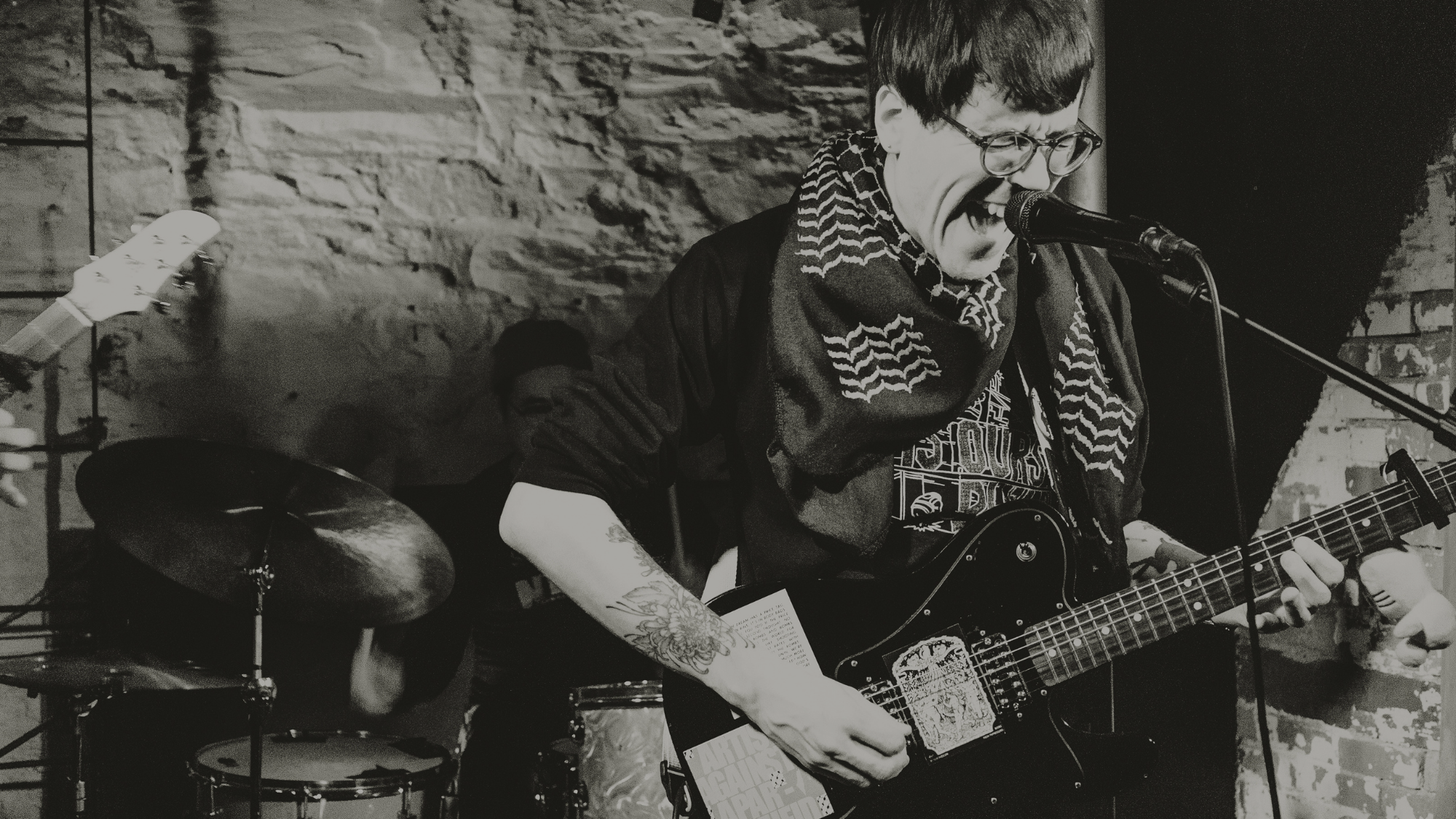
Jorge fronting Fear Not Ourselves Alone
I relate to parts of your story as someone who grew up very sheltered, albeit in a different and privileged way. The things that shaped my younger worldview were a result of that sheltering, so I tried to remain apolitical. But eventually, hearing the experiences of people I knew and loved made me realize that if I care about those people, then I have to care about how politics affect them.
Katixa: That makes me think of when I [switched] schools growing up. There were a few people that were lower middle class, and I was a part of that group. I was just like, “there's something off about me being here, and it’s not just that I’m not white. Why do I feel like the poorest person here?”
When I [later] moved to New York to attend the Pratt Institute, which is a really expensive private art school, I got myself into a ton of student debt. That was an awakening. “Why is everyone here having it super easy while I’m waking up in sweats thinking about my future? Will I ever pay these loans off or live a comfortable life?” It was also in Clinton Hill, which is very divided class-wise. There's a large black community that's been displaced, and there's another group that's super wealthy—a lot of celebrities live there. That all made me realize that I have no other option but to be political.
Sure, because it’s your lived experience.
Katixa: Yeah. As I started dating Jorge [Author's Note: oh yeah, Jorge & Katixa are married] and visiting Jackson Heights more, that started feeling like home. Queens is particularly working class, and that's where I felt the most “normal.” Some people call Jackson Heights “Liberation Heights” because everyone’s mere existence is political there. New York, in general, is what made me see that there is a class war happening nationally.
You said you had “no other option to be political.” I think there’s a misconception of what that means, and that people don’t always understand how politics fuels everything good or bad in their life. So being apolitical has dire political consequences. That said, can you explain what ICE Out does?
Jorge: ICE Out New York is a coalition of immigrants rights groups that have come together to push for the immediate end to Trump's terrorist agenda. We facilitate know-your-rights trainings, offer court accompaniment to vulnerable parties so that they go in with trained multilingual volunteers, and more.
Another point made by the coalition is to offer a genuine political education. Like, ICE didn't just appear overnight, you know. It started in 2003 with the Department of Homeland Security. It’s the escalation of a racist agenda that's come not just from Republicans, but also from Democrats. We want to help people understand that…
Katixa: The two party system is not going to save us.
Jorge: Exactly, and we don't have to wait ‘til the midterms to fix things. It's amazing what we're seeing and learning from Minneapolis—People were able to mobilize [quickly]. Organizational structures that did not previously exist popped up literally overnight. People were doing patrols, ICE watch, mutual aid, and overnight food delivery.
We don't need saviors or heroes, we just need a genuine working class movement. Should New York shift tomorrow, we will be ready whether we've done all the preparation or not, because the people are ready.
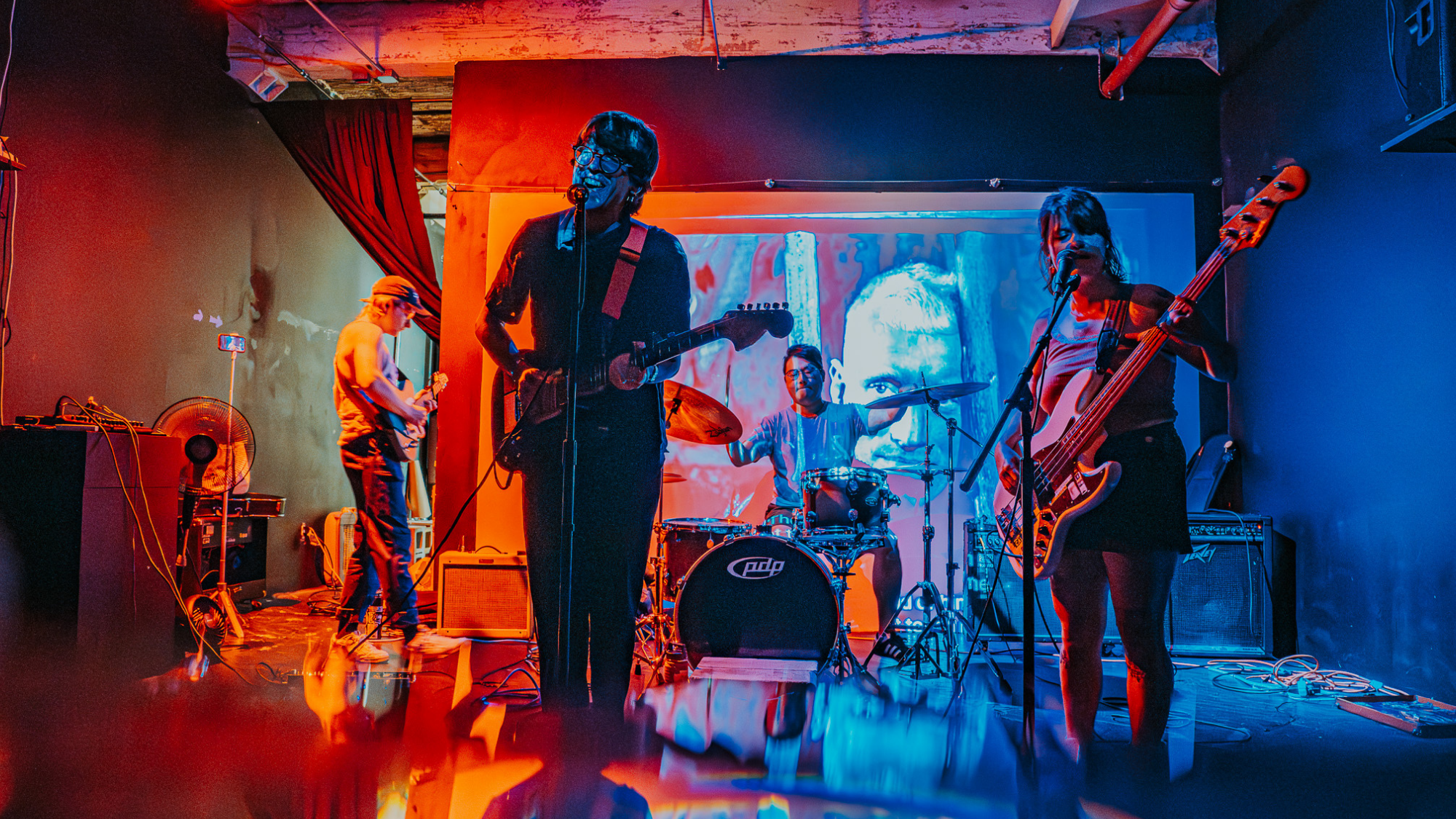
Fear Not Ourselves Alone live
I want to get into some of the events that you’ve told me about, particularly as it relates to music and DIY. For instance, you played an all ages show in the Bronx that facilitated a know-your-rights training.
Katixa: That was actually booked by a friend of ours, and one of ICE Out of New York’s coalition members lent their space. The show started with the know-your-rights-training and then, in between sets, there were political [conversations] to connect all the struggles–ICE, Palestine, and how the audience can get connected to movements going on in the city.
I think as we grow older, we sometimes forget about the importance of all-ages shows. Admittedly, they’re a bit harder to book as someone now in his 30s, because a lot of social get-togethers revolve around alcohol.
Katixa: Unconventional venues are easier to book all ages events at. When I think about being 16 to 18, I so badly wanted to see my favorite bands, but was very limited by 21+ shows. I was really grateful for venues like the Silent Barn—R.I.P! I really want to replicate that because there's not a lot of house venues here, either.
Shows in apartments are hard. I’ve only been to a couple in all my years here.
Katixa: Yeah. I could count the apartment venues I know on one hand, but maybe there's others that I'm not aware of. Since the pandemic, they pop up every so often.
But the main thing is that there are a lot of younger folks that want to attend shows! They want to dance and mosh around at a venue that's a 10 or 15 minute walk from them. My goal is to provide that and offer a place where they can not only learn how to protect themselves, but become aware of why their families might be struggling, tying it back to capitalism. It’s the reason my family struggles to this day. But my main goal is to provide a space for younger folks to find joy in their neighborhoods, especially when it’s hard to envision a light at the end of the tunnel.
bandNada centers around the DIY music scene in Brooklyn and the East Williamsburg Econo Lodge. Do you have advice for anyone who wants to use their DIY events and spaces for these kinds of activism?
Katixa: I think a big component is finding sober spaces, which are hard to come by in New York City. There is a bar at the next show I’m playing, but it will not be active. That’s ideal because we won’t need to ID anyone, since there will be zero access to alcohol.
Also, in terms of accessibility, and especially for a fundraiser, I’ll do a $5 suggested donation, because I know I could not afford a $20 or even $15 entry when I was younger. We want the younger audience to feel included and experience some of the things that I only experienced when I was 19 or 20 because of Silent Barn.
One of my first NY shows was Silent Barn’s very last show, right after I moved here in 2018.
Katixa: I wish more spaces like it existed. But for [activism-oriented get-togethers], it doesn’t just have to be DIY shows. We’ve seen know-your-rights training at salsa dances! And I understand if you're a business owner and you don't have time to volunteer, but maybe you can offer your restaurant or barber shop for an event.
Jorge: No one has to be a political expert. I think that relates back to bandNada and New York DIY, because a venue gives an opportunity to bring in local community orgs [and experts] to shows. Whether it's a local mutual aid group or just giving someone the mic in between sets to learn about Food Not Bombs or whatever, if what you have to offer is the space and the mic, that's still huge.
Katixa: That keeps punk culture alive, I think. You don't have to necessarily be playing “punk” or even “political” music. My band’s lyrical content isn't specifically “political,” right? But I write music in both English and Spanish about my personal experience, particularly my eating disorder. A venue letting people speak keeps punk alive, and sometimes I feel like that gets lost. Like, not to bring it back to Kurt Cobain…
Everything goes back to Nirvana.
Katixa: They would do things like that all the time. Courtney Love used to say shit too.
Nirvana is a great example of a band whose music wasn’t always blatantly “political,” but operated in a way that aligned with their progressive views. Even with you singing in Spanish, your songs may not be directly about politics or the government, but it reminds me of what someone said at the ICE OUT event I attended, “in white supremacy, speaking in your native tongue is a radical thing to do.” [paraphrased]
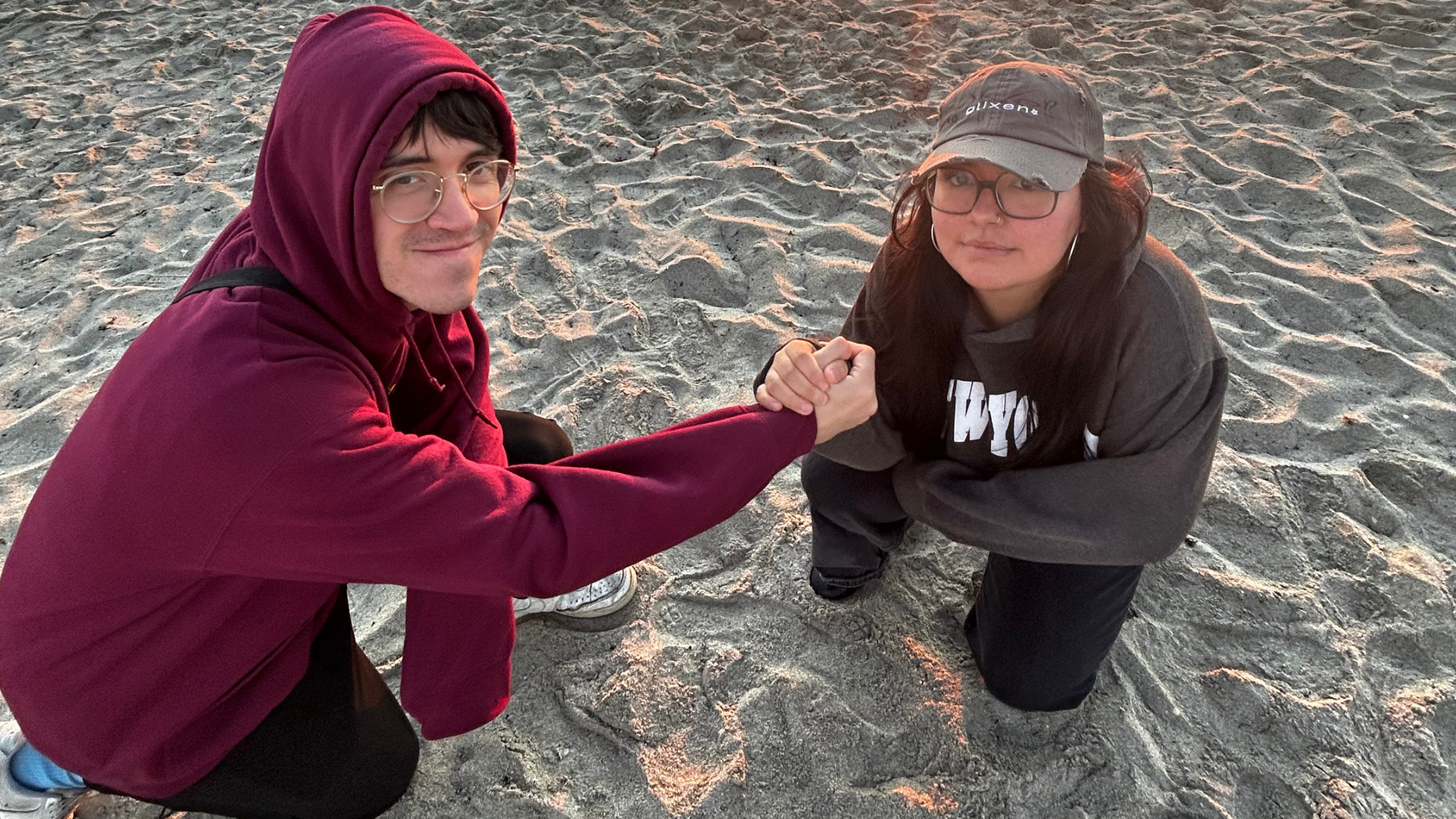
Two lovebirds hardstyling on a beach
My band’s not too political in our lyrical content either, but we started leaving free whistles on our merch table and ICE Out pamphlets. I think a lot of people want to know about opportunities to do more outside of just going to a protest or something, and you two have done a good job curating events where that’s possible.
Jorge: We're just paying it forward. I feel so lucky that I got to go to some all-ages shows in New York growing up. It's important–not just for the practical development of young people, but the development of art too. To any person that’s like, “I want to do this, but I don't know how”: let yourself feel it. That’s step one. You will reach it when the time is right. Like Marxist theory or whatever says, “The contradictions will reveal themselves.” When the time comes, all you have to do is follow your feet as you start moving.
Katixa: I think art should always be really accessible. For me, it didn’t feel [attainable] because of financial limitations. I am so grateful to DIY because it presented a community that not only cared for me personally, but as an artist. You know, I got a free guitar. [laughs] I always wanted to play rock music, and these spaces in the DIY community are the reason why I get to be a musician. I hope that there are people that see themselves in our events and are like, “I can do that too.”
Fear Not Ourselves Alone and Sana Sana are both v active. Sana Sana is playing at Purgatory on April 9th. For more info on ICE OUT, go to iceoutofny.org.
