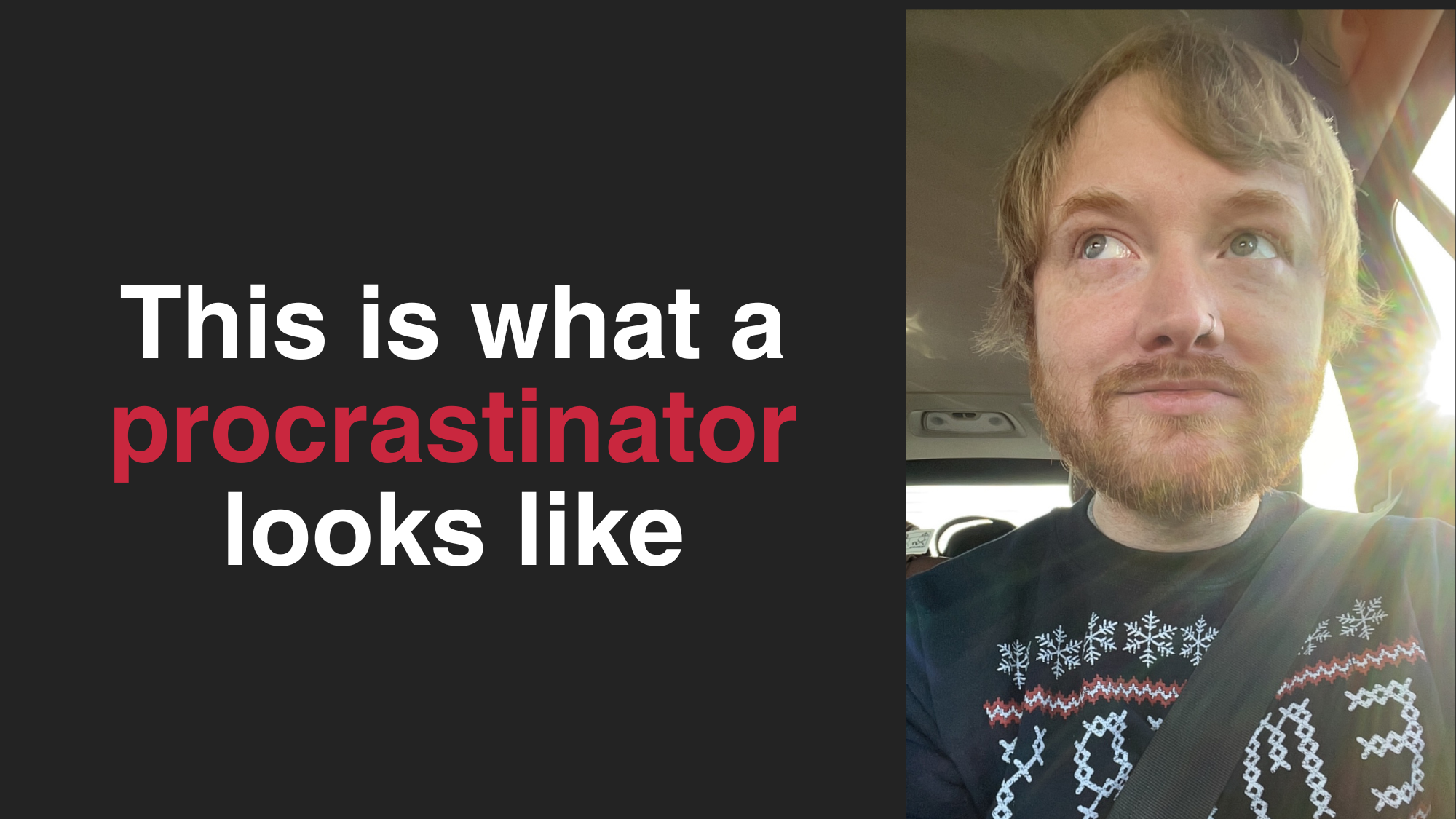
From me, the world’s worst (best) procrastinator.
I’m starting this one with a DISCLAIMER: We are talking about “doing art” today. I know that seems silly to talk about as the world falls apart around us. But for a lot of us, art is everything. It’s our sanity, our community, our escape, and it’s definitely our catharsis - especially in times like this.
That’s why it’s so devastating when we struggle to create. Art offers us hope. What’s the saying - art comforts the disturbed and disturbs the comforted? Whether you’re a professional or a hobbyist, art serves a legitimate purpose for us. Inability to participate in the tradition of creation can make us feel that we’ve lost our voice, our peace, and our power.
For me, making art has brought me solace and joy my entire life, first through drawing, and later through music and writing. These are the ways that I express myself. These are the things that have brought me my community. Even then, when it comes to my own creations, I am the king of not getting anything done. I am a master procrastinator.
If you think you’re a better procrastinator than me, I’ll fight you. Check out these credentials:
- In 2017, I wrote a full-length solo record, which I haven’t recorded yet.
- In 2018, I moved to NYC to get a job in the music industry, but have been working at a shitty energy brokerage for 3 years (don’t worry, my boss will never read this).
- Also in 2018, I recorded an EP called Knock on Wood about a series of losses I had or observed in my early 20’s. It was super personal and important to me. But I didn’t release it until 2024.
- In 2020, I wrote a song for my band Shrug Dealer called “Discipline” about my lack thereof. It’s still not out.
- I regularly have around 50-70 unread text messages that I actively avoid responding to. Sorry for never replying to you, Jon F. Daily.
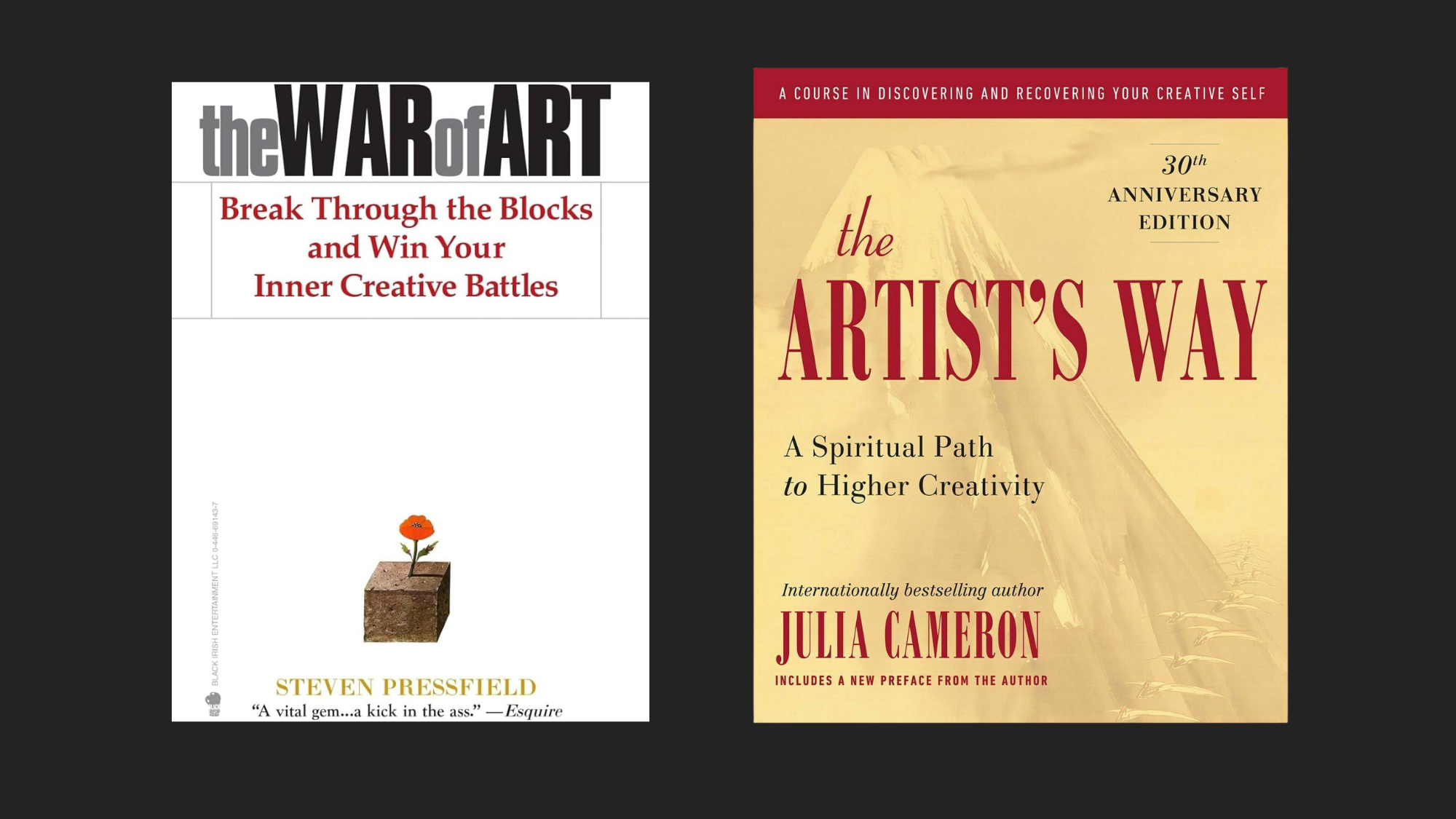
Being a master procrastinator is being at constant war with your own dreams and ambitions. That’s why I was intrigued when my friend, Thom Ulmer, showed up to A Very Special Episode’s Halloween show a few months ago and enthusiastically told JFD and me about a book he was reading to help him be a more productive artist. That book is called The War of Art by Steven Pressfield (the guy who wrote that book about golfing that was later made into a controversial movie featuring Will Smith). When we were discussing writing an article about artistic goals, Jon suggested I read it for inspiration, as well as The Artist’s Way by Julia Cameron.
And so I read them. Mostly.
And now I (metaphorically) stand before you all with my plan of attack against my own procrastinative tendencies, inspired by the knowledge gleaned from these books that I only mostly read. I’ll be referring to “you” as I explain these goals, but in full transparency, I’m mostly just addressing myself. So without further ado, let’s get into it.
Step 1: Recontextualize art and procrastination for yourself
Up front, I feel the need to apologize, because I’m about to play therapist and tread into the waters of self-help. But for me, dissecting why I procrastinate was crucial. See, after a lot of soul searching, I learned that I procrastinate out of fear, and I justify that by convincing myself that art isn’t really that important.
That said, I needed to change my mindset. There are two new basic truths I now live by:
1) Art is objectively important.
2) Procrastination is here to steal your happiness.
Let’s talk about that first statement: art is objectively important. For years, I devalued the importance of art. I viewed it as a selfish obsession with few tangible benefits for the world at large. In the face of systemic inequities, interpersonal relationships, and climate change, art was just a hobby or an ego trap.
But here’s why I was wrong: art is a way to communicate tangible truths by appealing to the senses. Through various kinds of art, we pass on information, relate to others’ struggles, and help them heal. Art is human-made, and ultimately human-centered. If people are important, art is also important.
Now let’s tackle that second point: procrastination is here to steal your happiness. The War of Art calls procrastination “resistance” - that drive to not do the work at hand. Listen, the single most important takeaway I took from this book was that resistance always points true north. 99% of the time that I procrastinate, I am putting off things that will make me happy.
Like, scroll back to the top and look at all of the musical projects I’ve put off over the years. Music makes me happy - so procrastinating it is only delaying. own happiness. I think I do this because I’m afraid of trying and failing, or succeeding and then failing next time. I’m afraid of not meeting expectations.
This has led me to turn in projects late and half-baked my whole life. Whatever success meant to me in each of these instances, it was easier to pre-determine my own failure than expect anything more of myself.
All that’s done has kept me stuck. That fear of failure? It’s bullshit.
Step 2: The Nike catchphrase
If inaction is the thing preventing me from reaching any artistic goals, then action is the only way forward. According to Cameron and Pressfield, the most important action you can take to unblock yourself from creating is to simply start doing the work.
This isn’t the best example, but try to follow me for a second. Pretend I’m a hockey player (I chose hockey because other sports are stupid). I, an awesome and buff hockey player, am standing behind my team’s net, and my desire is to score a goal (no pun intended). For those who don’t know, hockey rinks are pretty lengthy. I can’t reasonably stay in place and, assuming I have the puck, shoot it all the way to the other side of the ice with any kind of expectation of scoring a goal. The only thing I can do is start to skate toward it.
In art, that means you pick up your pen and write. You pick up your eisel and start painting. You grab your guitar and strum.
Back to the hockey analogy. Of course, skating toward the net is not enough. I’m going to have to hit some checkpoints along the way—my team’s blue line, center ice, and the opposing team’s blue line—before even approaching the enemy goal. That’ll require getting past the opposing team’s players, not going offsides (IYKYK), and working with my teammates.
If I apply this to making a record, it might look like this:
- Passing my team’s blue line: all songs written
- Passing center ice: all songs recorded
- Passing the opposing team’s blue line: Mixed, mastered
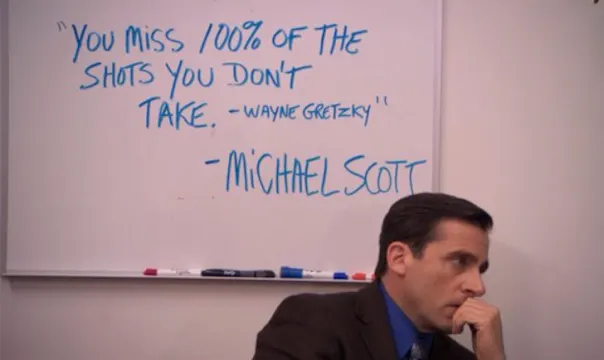
Even then, if I shoot, a goal isn’t guaranteed. We have to keep doing the work. This requires making your effort habitual. Don’t get me wrong - I’m a terrible habit-builder. Like, unbelievably bad at building habits. But there’s really no excuse not to try (Insert Steve Carell quoting Wayne Gretzky, because hockey). No goals are scored if no shots are taken.
Note: With habits, it may be best to start small. Currently, at the behest of The Artist’s Way, I’m brain dumping onto three pages per day as part of a practice they call “The Morning Pages.” I’m supposed to do it for 12 weeks, but knowing myself, that’s unlikely. Thus, I’m committing to it until I finish the end of the notebook I’m writing in, which will give me until the middle of next month. When I’m done with the notebook, we’ll see if I want to continue. But I won’t overcommit. Habits are made in steps, not lofty long-term promises.
Step 3: Call yourself an artist
The Artist’s Way is very serious about combating your self-doubt. In the book, Cameron puts more importance on the act of “doing art” than the results. In her worldview, painting makes you a painter, regardless of where that painting goes (although completion is important, no sex joke intended. More on that later). In her mind, notoriety, money, and professional credibility don’t determine one’s status as an artist. If we create art, then we are to call ourselves artists.
This runs contrary to my nature.
I am self-depricating, because it’s fun. But also, because I’m more comfortable speaking lowly of myself, because in my mind, speaking well of myself is somehow over-inflating my own importance. But Cameron’s not asking me to over-inflate anything. Instead, she is asking that I put myself on par with each of my idols.
Ian Mackaye and I are the same.
Bill Stevenson and I are the same.
Hayley Williams and I are the same, sort of. The idea is not to compare your struggle or your impact to those of others. Rather, the idea is to not compare your struggles or impacts to theirs at all! If you’re doing the work, then your art is equally as much “art” as theirs is.
This led me to make some super uncomfortable self-affirmations in my “Morning Pages.” They went something like this:
“I am a good artist, and my music has mass appeal.”
“I am an artist, and I have the ability to have a career.”
Again, this felt too self-important for me. But it wasn’t. Let me explain.
I’m not looking for widespread recognition or for my music to pay my bills. But my music can be enjoyed by people beyond my immediate circles. I’m calling that “mass appeal.” Likewise, I have the ability to create a solid body of musical work in my lifetime. I’m calling that a “career.” After all, most of the bands I listen to have other jobs anyway.
So yeah. If you’re reading this and you make art, you are 110% an artist. Don’t let any jabroni tell you otherwise.
Step 4: Revisit your goals when circumstances change
Perfectionism isn’t a worthy goal. But completing your projects might be!
As someone who never finishes anything (once again, no sex joke intended), I’ve found two reasons that I give up on things when they don’t go according to plan.
1) My goals aren’t specific enough.
If my goal is to make a record, but I don’t address the parameters in which it’ll be made (how many songs, when it’s written by), then I’ll never get around to it. Broad goals might be a starting point but specifics are necessary.
2) When I miss my goals, I rarely reset them.
When I don’t hit my goals, I sometimes become so discouraged that I don’t even realize there’s other chances to succeed. Let’s say I’ve scheduled studio time tomorrow morning to record vocals on said imaginary album. But my train is delayed or, even worse, I slept through my alarms like a fucking teenager not a man in his 30s this is all hypothetical. In the past, I’ve retreated out of shame! I’ve stopped doing the work. But am I not an adult with the power to reschedule? Can I not hold myself accountable and do what it takes to get this done? No matter how bad you fuck up, most of the time you can come back from it if you’re willing to put in the work.
When obstacles come, find your way around them and keep doing the work. The most important part of getting something done is simply doing it.
Step 5: Expect the results to differ from your expectations
I have a confession.
Even though I said it’s important to eventually finish your shit, you need to know that you can’t always control what the outcome looks like. The actual final “product” may be very different than what you were imagining.
Listen to me: that’s okay.
Rigid expectations ruin happy accidents. Stay open to things changing, or you’ll miss opportunities to improve, enhance, or grow your work into something better.
Here’s an example from my life: last year my band wrote a full-length album, and as we were prepping to record it, we realized that not all of the songs were ready to record. Rather than wait another year to record it, we decided to do four EPs instead, so we could put new music out and have more time to work on the songs that weren’t up to snuff yet.
Initially, I was bummed that my bandmates wanted to take this route. But there are a lot of pros to doing it this way. For starters, it gives us a chance to rebuild our following and build some buzz while completing the other songs. It also means that we can release it as a series, which opens up another world of artistic possibilities with album art, themes, and performances. Best of all, it lets us put something out soon, but without phoning it in or half-assing it like if we had put out the songs that weren’t up to par. If I had let myself stay closed off to the idea, we would have continued not releasing music, and that would have sucked.
So, in short, don’t be afraid to go with the flow a bit. Be open to change. I shit you not, going with the flow and accepting change has taken me to some pretty exciting places. Some examples include:
- Doing merch for one of my heroes at Brooklyn Steele
- Re-issuing records that I grew up listening to
- Writing for magazines that I used to read regularly
- Doing public relations for other labels and artists
- Working with great bands on their album art, and applying those skills to my career
- Getting to write an article about reaching your artistic goals in 2026 for bandNada.com
And I would have learned and achieved even more if it weren’t for my self-doubt and you meddling kids.
Recap/Conclusion/I Hate Writing Subheadings
Let’s sum it up quickly, because I wrote a lot of fuckin’ words here. These are the steps I’m taking and thus recommending to you for completing artistic goals this year.
1) Recontextualize art and procrastination for yourself - Art is important. Procrastination tries to steal your happiness.
2) The Nike catch phrase - Just do it. The most important thing for reaching your goals is simply starting. Figure the rest out as you go.
3) Call yourself an artist - If you actively DO ART, you’re an artist.
4) Revisit your goals when circumstances change - When circumstances change, re-evaluate your parameters and act accordingly.
5) Expect the results to differ from your expectations - Be open to your finished “product” looking different than you envisioned, and enjoy whatever comes of it.
With that said, if you’ve made it this far, you deserve a cookie. Feel free to reach out and tell me how you’re overcoming your artistic blocks and planning to achieve your goals this year. You go this! We’re all in this together! Let’s make some cool stuff in 2026! Go team! Yeah!